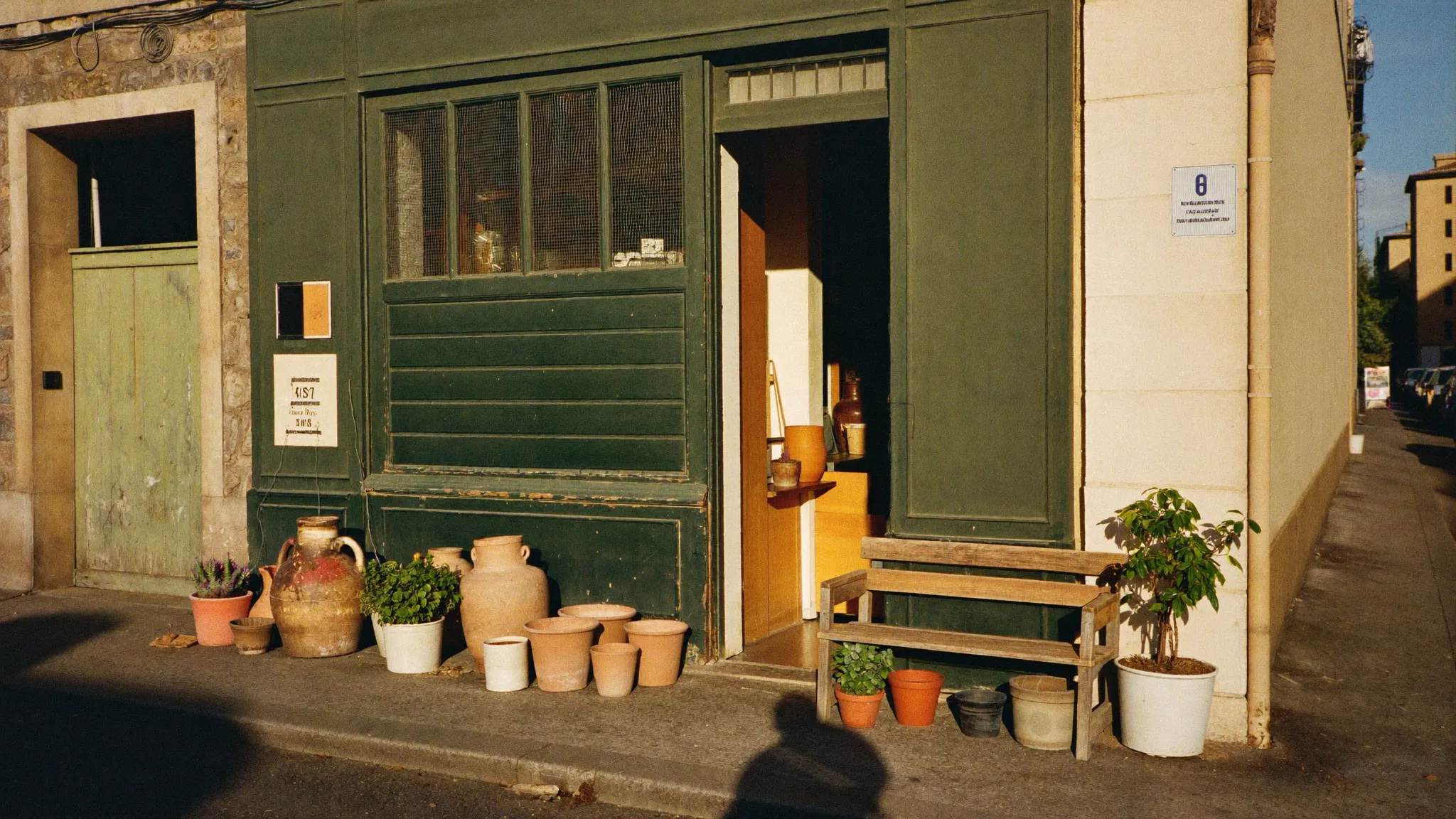
The door is the first thing anyone mentions, so let me get it out of the way. It is green, a deep municipal green that has faded unevenly, and it used to open onto a hardware store. You can still see the ghost of the old sign in the brick above it if the light is low enough, a paler rectangle where paint once was.
I came here on a Tuesday because Tuesdays are when a place shows you the truth. No weekend crowd to perform for. Just the regulars and the rhythm.
A room that was made, not decorated
Inside, the shop kept the hardware store's bones. The long counter is the original, refinished but not replaced, and you can feel decades of elbows in the wood. The shelving is the same tall industrial kind that once held nails and paint by the pound. The owner, who asked that I describe the place rather than her, told me the renovation budget was mostly spent on not renovating.
"People can tell," she said, running a cloth along the counter out of habit more than need. "When a room is trying too hard. They get restless. They buy their thing and they leave."
Her whole philosophy, as far as I could reconstruct it over the course of an afternoon, is about restlessness and its opposite. She wants people to slow down. Not to buy more, she was clear about that, sometimes to buy nothing. A shop where people linger, she believes, is a shop that is trusted, and trust outlasts any single transaction.
"I'm not selling from the shelf," she said. "I'm selling the corner. The shelf is just what's on the corner."
The bench
The bench outside is deliberate. Old church pew, she thinks, though she bought it from someone who bought it from someone. It sits to the left of the green door, and over the course of my afternoon I watched it do more work than any display inside.
A man sat with a coffee from the place two doors down and stayed twenty minutes. Two teenagers perched on the arm of it, talking about nothing, in the way that is somehow everything at that age. An older woman lowered herself onto it with the small sigh of someone whose feet have earned the rest, and the owner came out with a glass of water unbidden and they talked about the weather with the ease of people who have had this exact conversation a hundred times and will have it a hundred more.
None of them bought anything while I watched. All of them, I suspect, will be back.
Culture on a corner
What this shop understands, and what a lot of glossier places miss, is that a neighborhood store is a piece of infrastructure for a certain kind of unhurried life. It is where the culture of a block actually lives, in the small repeated encounters, the recognitions, the way a shopkeeper remembers not just what you like but how your week has been.
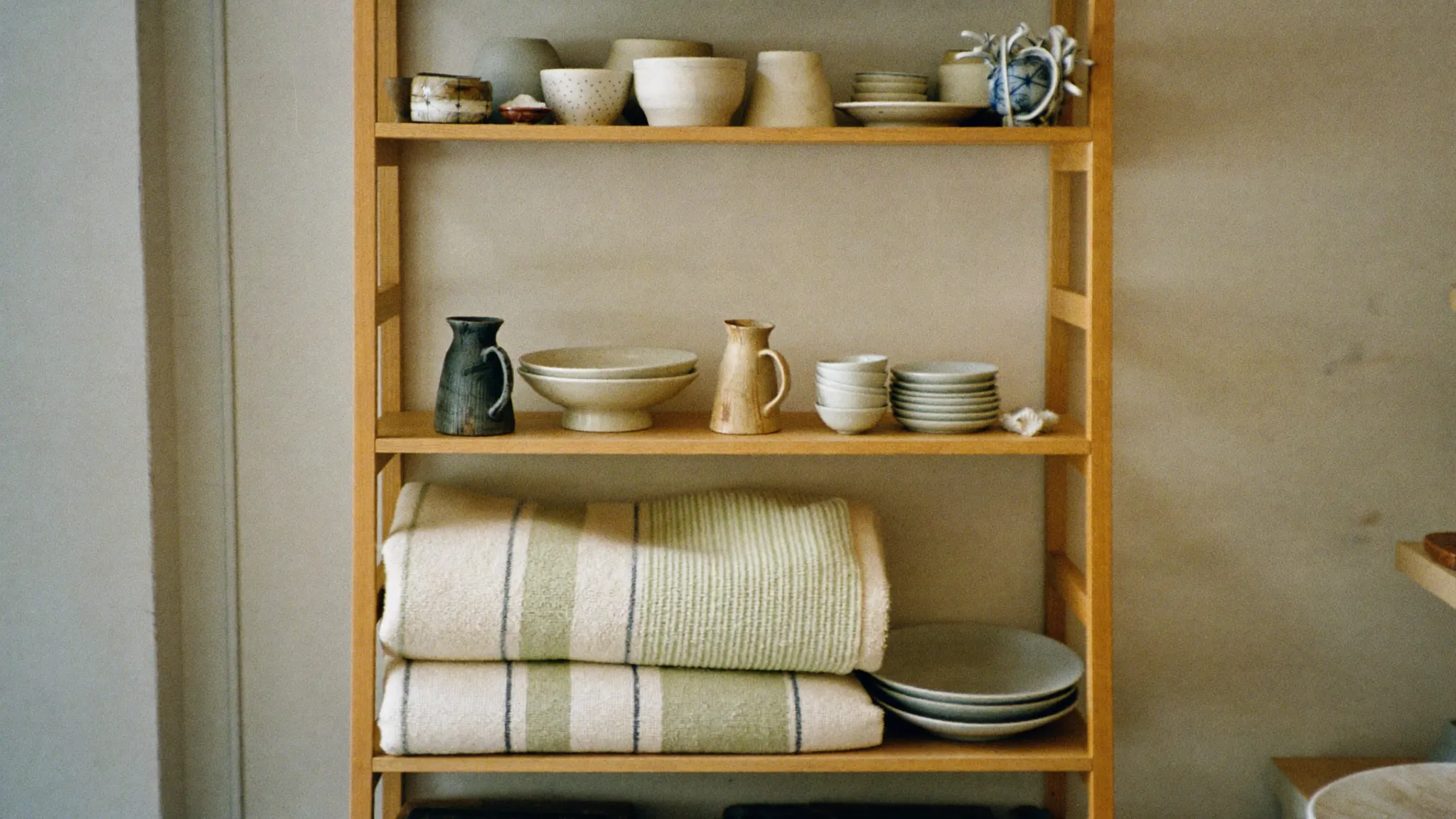
Everything they carry is handled here the way a good grocer handles a fine olive oil, as one considered thing among many, offered if you want it and left alone if you don't. There is no spectacle to it, no neon, no urgency. It sits on the shelf with the ceramics and the good candles and the local honey, part of a life someone might assemble slowly, item by item, over years of Tuesdays.
I left as the light went gold and the green door caught it. The bench was empty for the first time all afternoon. It would not stay that way for long. Somewhere down the block, someone was walking home the slow way, past the corner, and thinking, as people do, that they might just stop in.
Blackbird Hollow is a slow-living magazine. Nothing here is medical or health advice — we write about atmosphere, craft, and living well, not treatment.