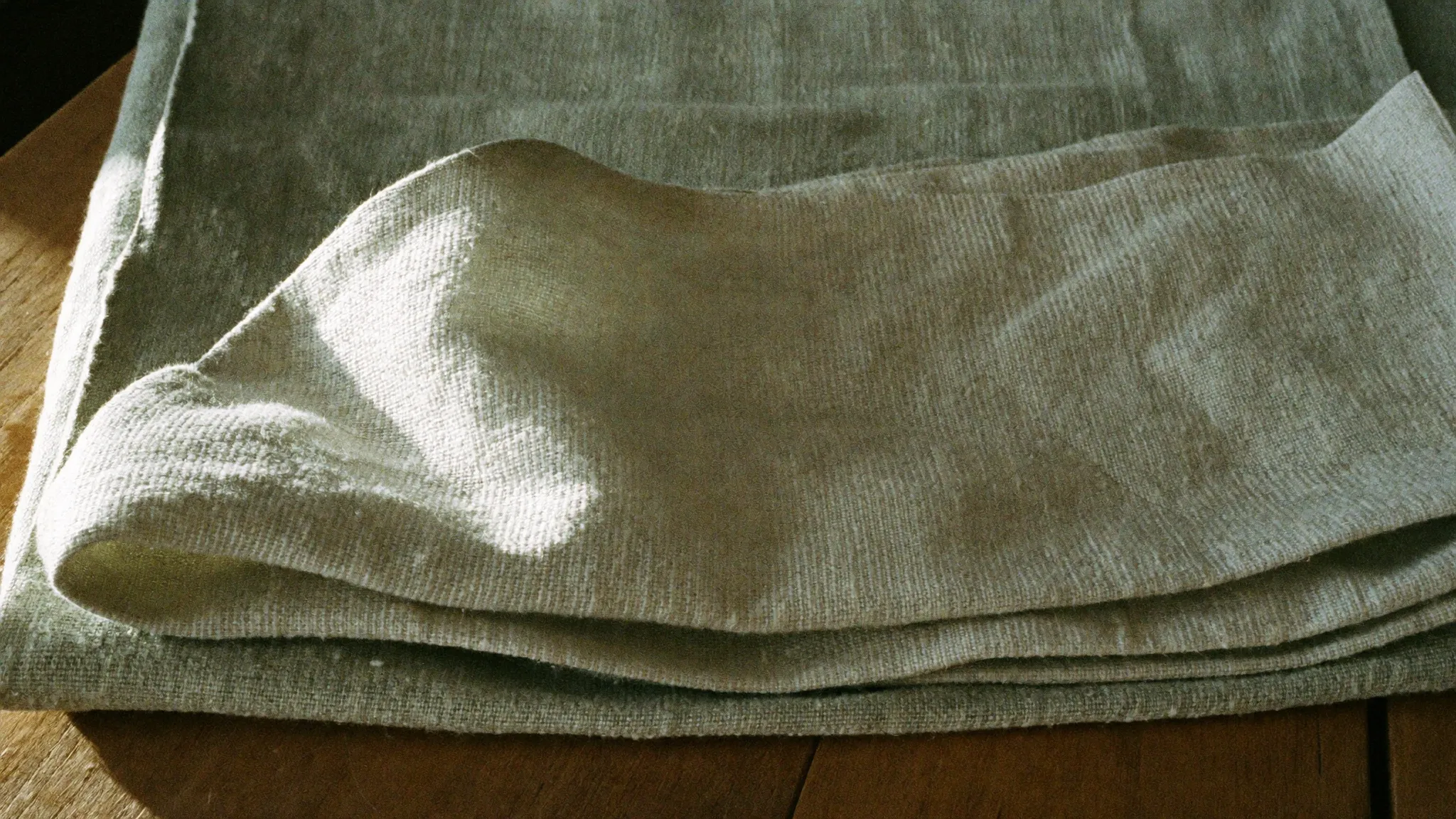
I bought a hemp apron eleven years ago from a woman at a market who told me, with the flat confidence of someone stating a natural law, that it would outlive me. I laughed. She did not. She was, I have come to accept, probably right.
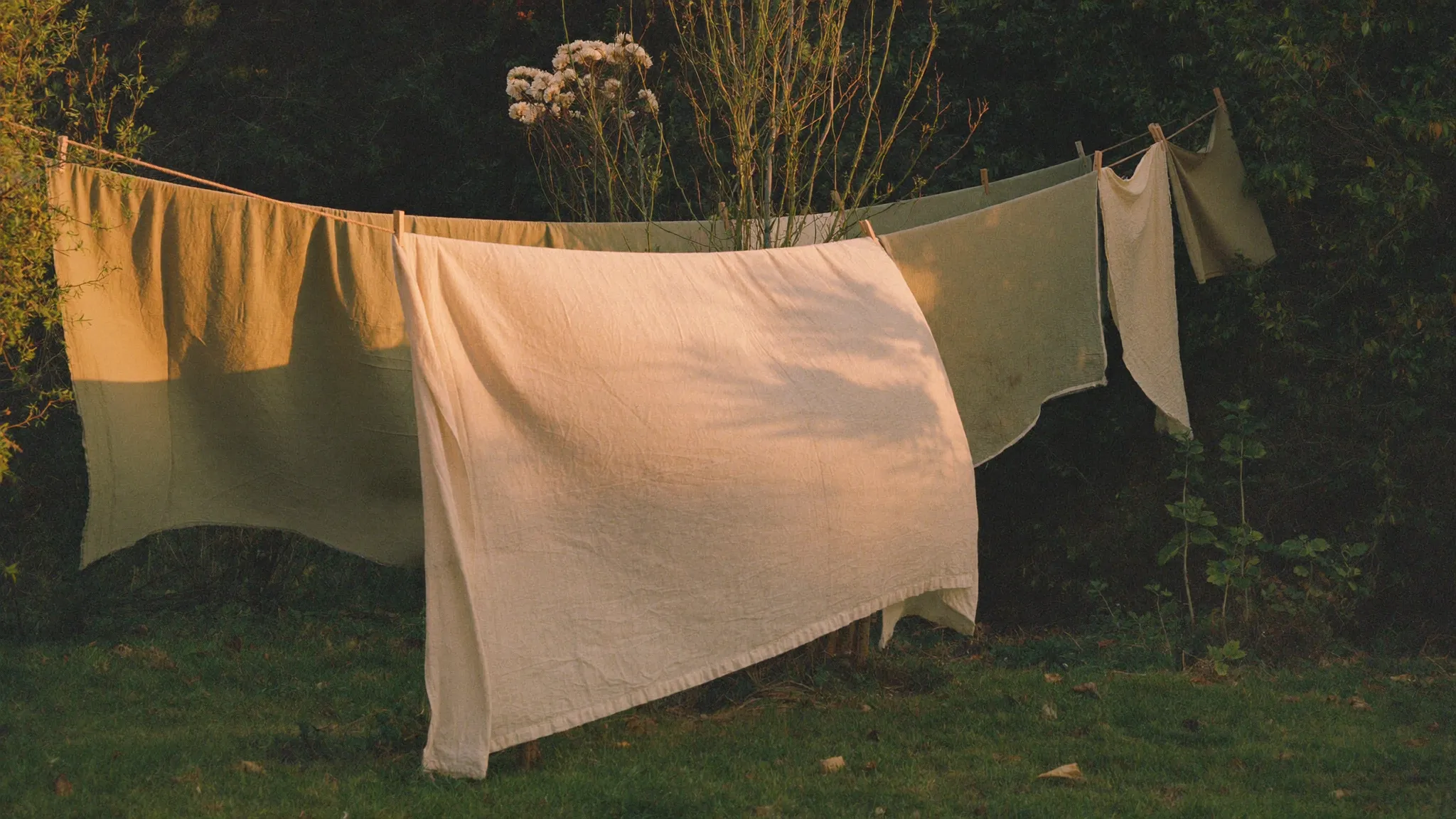
The apron has changed. It arrived stiff and a little unfriendly, the color of wet sand, with a weave you could feel through your fingertips like a private braille. It is now the softest thing I own. It has faded to the pale of old bone at the folds and gone dark where my hands wipe against it, so that the garment has begun, faintly, to record me.
A cloth with a memory
This is the thing about hemp that I did not understand when I was younger and wanted everything to be soft on the first day. It is a fiber that ages toward you rather than away. Cotton wears out. Hemp wears in. There is a difference, and it is roughly the difference between a friendship that thins and one that deepens.
The fiber comes from a tall, unfussy plant that grows fast and asks little, and something of that character survives into the cloth. It is not delicate. You cannot ruin it with ordinary living, which is a rare and underrated quality in the things we bring into a home. So much of what we buy now must be handled gently, kept from the sun, kept from the wash, kept, essentially, from being used. Hemp does not want to be protected. It wants to be worked.
The plant grows without much asking, and the cloth lives without much minding. There is a whole way of being in that.
Against the tyranny of the new
We have been taught, expensively, to prefer the new version of everything. The unwrinkled, the unfaded, the unmarked. A whole economy runs on the small dissatisfaction of the thing that has started to show its age.
Hemp is quietly subversive here. It is one of the few materials that is genuinely at its worst on the day you buy it. Everything after that is improvement. The apron I bought was, on that first morning, the least good it would ever be, and I did not know that, and I nearly returned it for something softer and lesser.
I think of this now when I am tempted by the new. The impulse to replace is often just impatience wearing the mask of taste. The thing is not wrong. I have simply not lived with it long enough.
What a home is made of
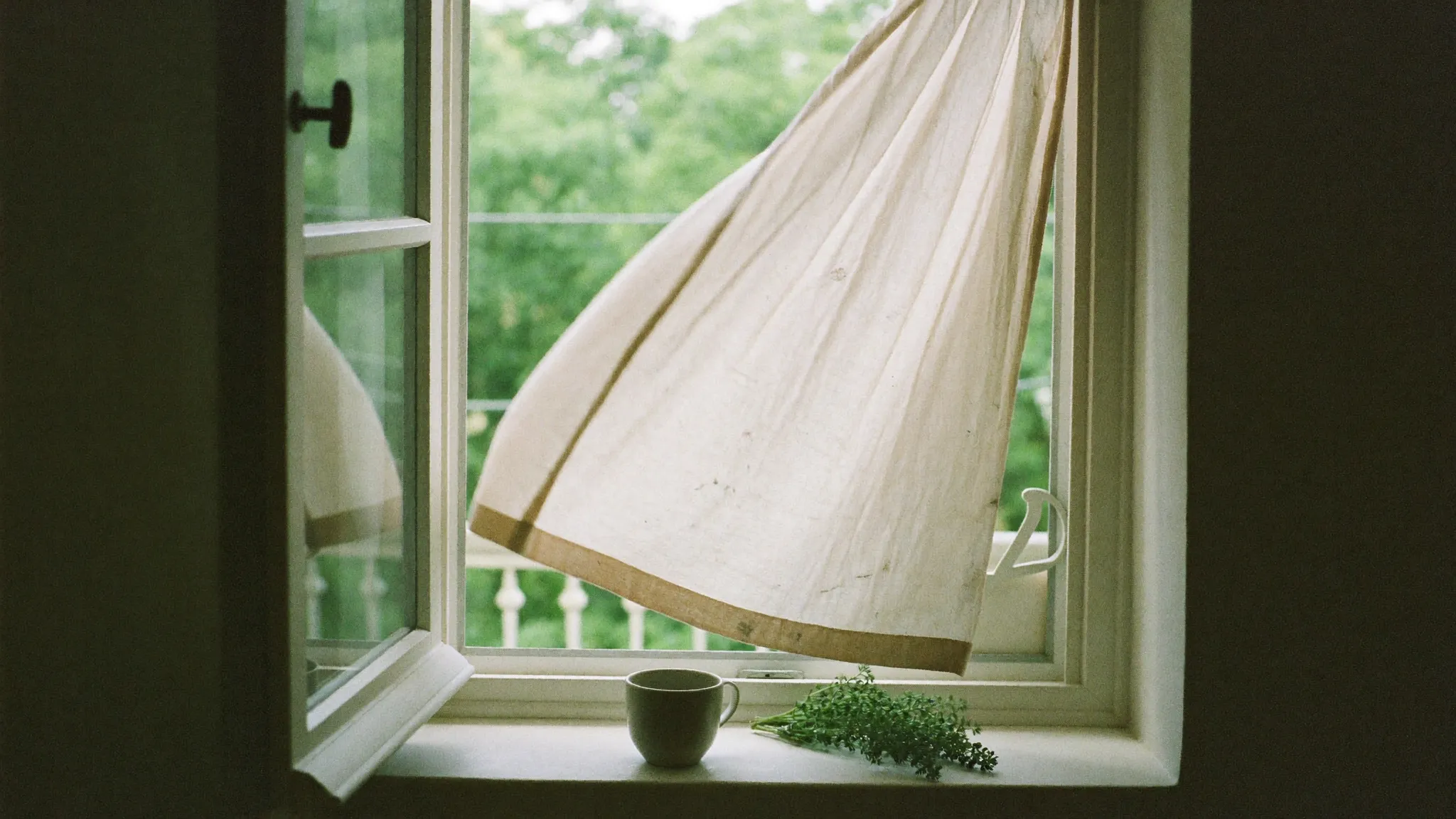
A home, if you let it, becomes an archive of this kind of patience. The hemp curtain that has taken on the exact gold of the afternoons it has filtered. The table that has darkened under a decade of cups. The apron that knows my hands.
None of it looked like much on day one. That is the secret the woman at the market was keeping behind her flat certainty. She was not selling me an apron. She was selling me the eleven years, and the version of myself who would be patient enough to collect them, one wiped hand at a time.
The cloth outlives us because it is honest about time. It does not pretend the years aren't passing. It just decides, unlike most of what we own, to be improved by them. I am trying to learn the trick. The apron, softening still, is a patient teacher.
Blackbird Hollow is a slow-living magazine. Nothing here is medical or health advice — we write about atmosphere, craft, and living well, not treatment.